US Permit Test — Signals & Pavement Markings flashcards
6 of 64 questions free to study here · 10 topics · the whole deck is built into Willys
Traffic signals and arrows, flashing and dark signals, pedestrian and lane-use signals, yellow and white lines, special lanes, stop and yield lines, hand signals, and officers' and flaggers' directions as asked on permit tests; national rules only.
Practice deck · part of US driver's permit test — national core · written against: Signs per the FHWA MUTCD 11th Edition with Revision 1 (December 2025), whose figures for these signs are unchanged from December 2023; rules of the road common to every state handbook, cross-checked against the California (2025), Texas (January 2026) and Florida (08/2023) handbooks; figures that vary by state are left to the state folders. Updated 2026-10-10.
Study the free sample
6 questions from the deck as they are. Flip, rate yourself, filter by topic; your progress stays in this browser.
Tap the card or press Space to flip
The 6 sample questions as a list
-
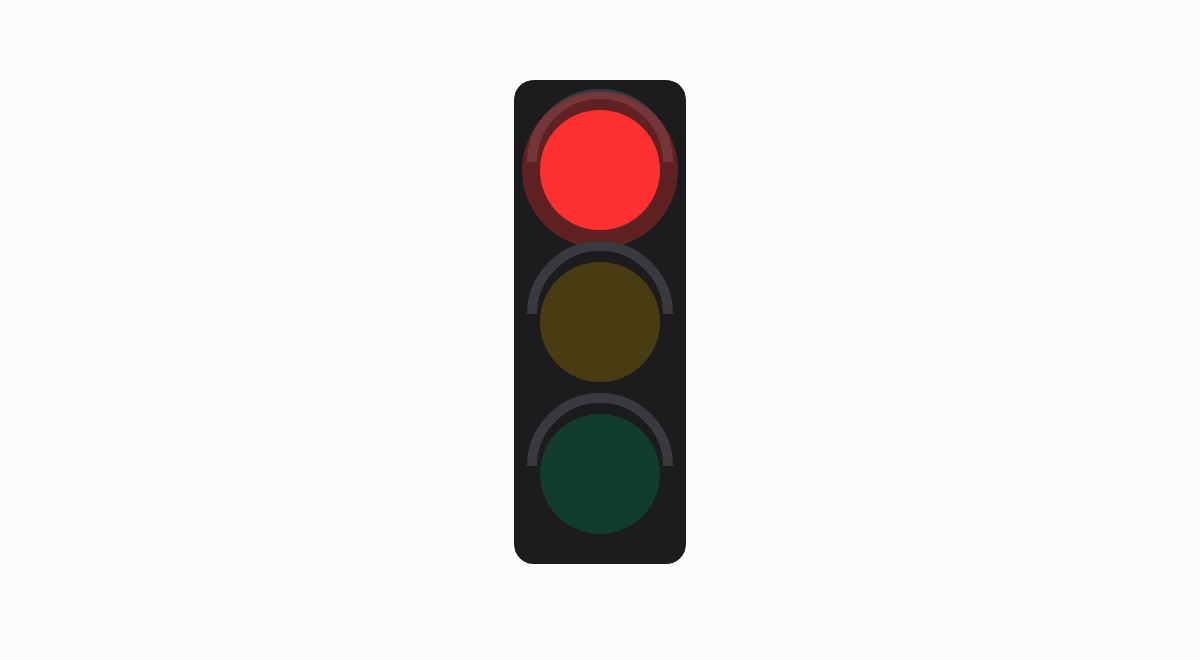 You approach this signal. What does it require?
A) Come to a complete stop and wait
B) Slow down and go if the way is clear
C) Stop only if cross traffic is present
D) Stop only briefly, then go straightA) Come to a complete stop and waitSteady Signals
A steady red means stop and remain stopped until a green light or arrow releases you; the only exception is a permitted turn on red after a full stop. -
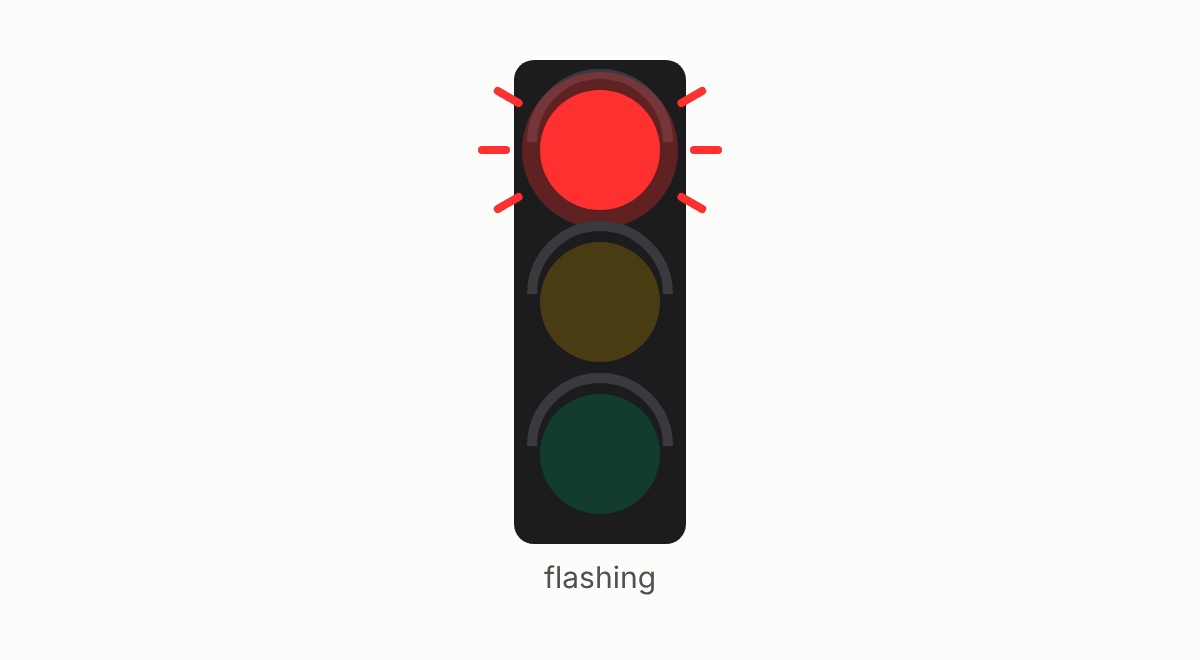 What does this signal require?
A) Slow down and proceed with caution
B) Stop and wait until the flashing ends
C) Stop fully, yield, then proceed when clear
D) Yield only to vehicles on your rightC) Stop fully, yield, then proceed when clearFlashing Signals & Dark Signals
A flashing red works exactly like a stop sign. -
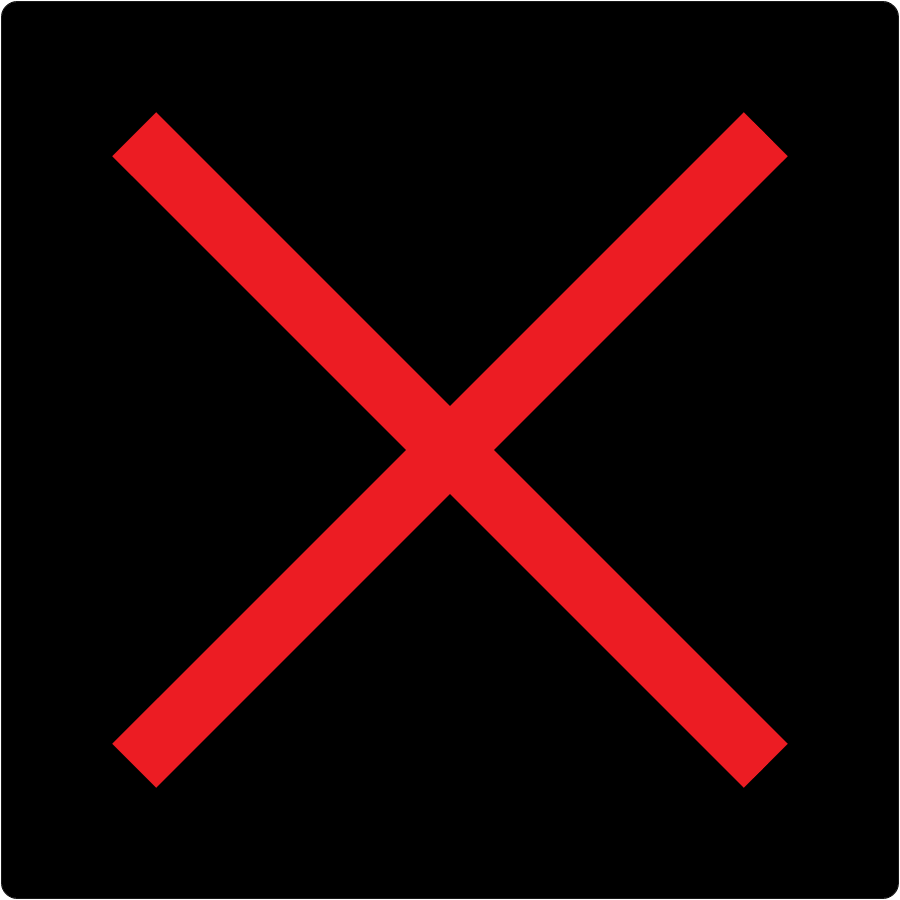 This signal is lit above the lane you are driving in. What does it mean?
A) Stop in the lane until it changes
B) The lane is closed only to trucks
C) Merge into that lane; it opens soon
D) Do not drive in that laneD) Do not drive in that laneLane-Use Control Signals
A red X closes the lane beneath it to traffic in your direction; leave it as soon as it is safe. -
What kind of traffic does a yellow center line separate?
A) Traffic moving in the same direction
B) Vehicles from a bicycle lane
C) The travel lane from the shoulder
D) Traffic moving in opposite directionsYellow vs White Lines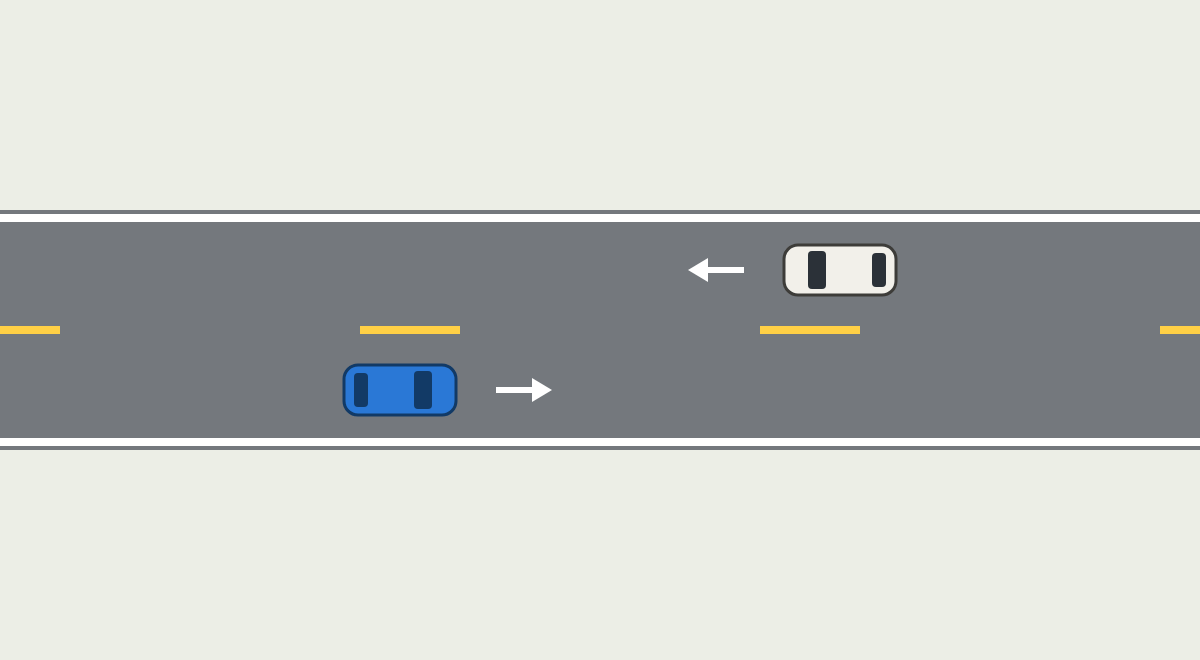 D) Traffic moving in opposite directions
A yellow center line marks the boundary between you and oncoming traffic. -
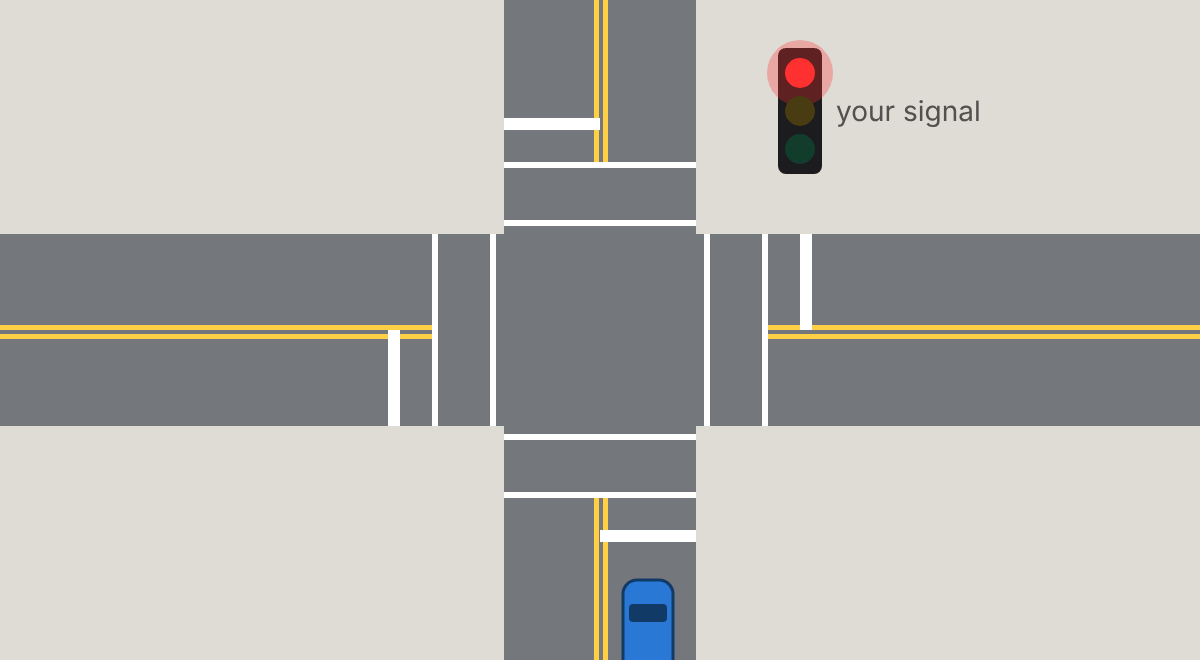 What is the white line across your lane nearest your car?
A) A crosswalk for pedestrians
B) A stop line; stop before it
C) A yield line; slow down
D) A lane-ending markerB) A stop line; stop before itStop & Yield Lines & Crosswalks
The stop line shows where to stop at a red light or stop sign. -
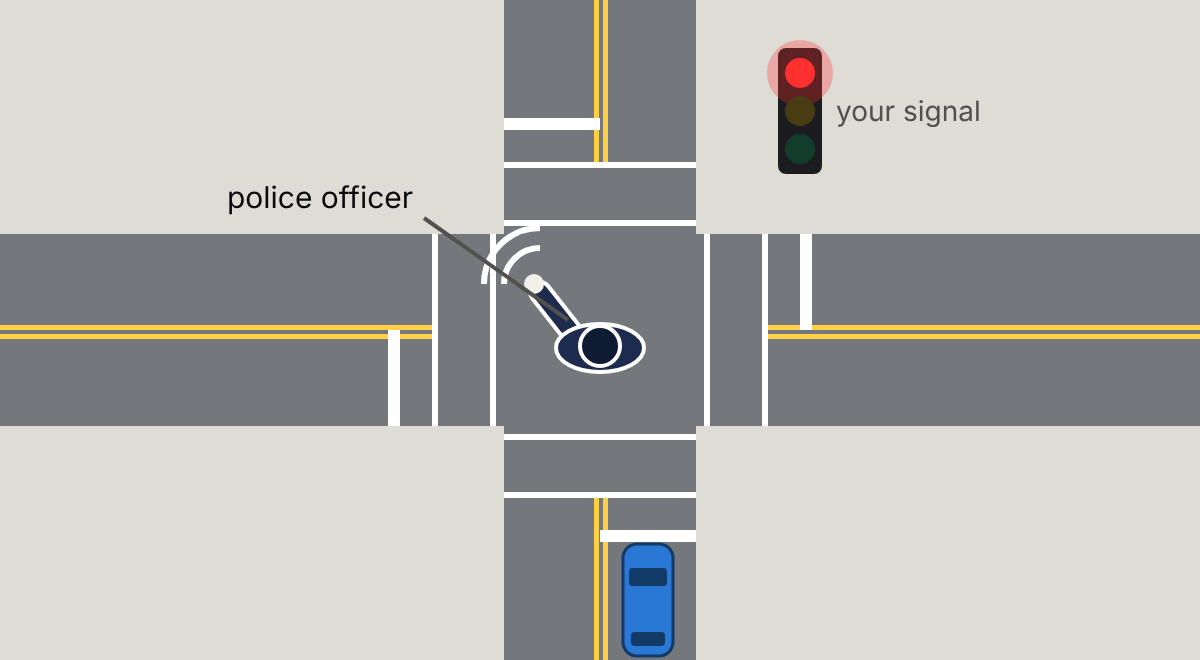 A police officer waves you through on red. What do you do?
A) Follow the officer's directions
B) Wait for green; the signal always rules
C) Stop first, then proceed as at a stop sign
D) Pull over and wait for instructionsA) Follow the officer's directionsOfficers & Flaggers
An officer's hand signals override traffic signals, signs and markings.
Unlock the whole deck
You are studying a free 6-question sample. All 64 questions of US Permit Test — Signals & Pavement Markings, the other 4 US driver's permit test — national core decks, and spaced-repetition scheduling are built into Willys. 14-day free trial, then $14.99 a year.
In Willys, tap Exam Library at the top of your Decks (or Browse Exam Library… under the + button), find the exam on its shelf or by search, tick it and tap Add.
More US driver's permit test — national core decks
← All US driver's permit test — national core decks, with the study guide and topic outline.
About these cards
Review status: Second-reader reviewed, with corrections applied.
Checked against:
- Checked against the rules shared by the California Driver's Handbook (2025 online edition), the Texas Driver Handbook (DL-7, revised January 2026) and the Official Florida Driver License Handbook (rev. 08/2023), and the FHWA MUTCD 11th Edition (December 2023, with Revision 1 of December 2025) for signal and marking meanings; wording is original.
- Pictures (the folder's media/): pedestrian signals, lane-use signals and flaggers drawn after the MUTCD 11th Edition's Figures 4I-1, 4T-1 and 6D-1 by tools/draw_signs.mjs (public domain; see media/sources.json); signal faces, pavement markings, plan views and hand signals drawn after the MUTCD by tools/diagrams/us_permit_test_core.py, with the bicycle symbol taken from Figure 9E-1.
- Not affiliated with, or endorsed by, any state DMV or motor-vehicle agency; not legal advice. Check your state's current handbook.
These are independent study notes written for Willys. They are not official exam material, may contain mistakes, and are no substitute for your course, your teacher or the exam owner's own publications. Found an error? Tell us — corrections ship as a new version of the deck.
Not legal advice, and not affiliated with any DMV. These cards prepare you for the knowledge test. Traffic laws differ between states and change every year, so check your state's current official driver handbook, which is the only authority for your test. No state seal or agency logo appears here; sign drawings follow the federal MUTCD designs.
Not affiliated with, or endorsed by, any state DMV, department of public safety or motor-vehicle agency, and not legal advice. Laws and handbooks change: check your state's current official driver handbook before the test. Road-sign pictures are taken from the figures of the FHWA MUTCD (a public-domain US government work); no state seal or agency logo is used.
Use of these pages is covered by our Terms of Use.